



Checking an ancestor’s nationality is a very common service in the field of archival searches. Reasons why people apply for such a service are varied:
- Obtaining the ability to travel to another country and further registration of foreign citizenship;
- Checking the hypothesis/family legend regarding the presence of other nationalities in same family line.
The most “popular” requests are for confirmation of Polish and Jewish roots. Here, it should be remembered that this service is directly dependent on the legislation of Poland and Israel respectively, as each state forms its own rules for obtaining residence permits and citizenship.
In the case of confirmation of Jewish roots, it must be taken into account that:
- It is important that the document has such a category as “nationality” and that “Jew” be written in that field;
- There is a limit to the number of generations that can be between you and your Jewish ancestor – no further than the third tribe (you, your parents and your grandparents);
- Ideally, you should have several documents confirming the nationality of your ancestors – one is usually not enough;
- Jewishness is foremost considered on the maternal lineage, but confirmation on the father’s lineage is also possible;
- If an ancestor changed his/her faith from Judaism to another, his/her descendants cannot claim to be repatriated to Israel.
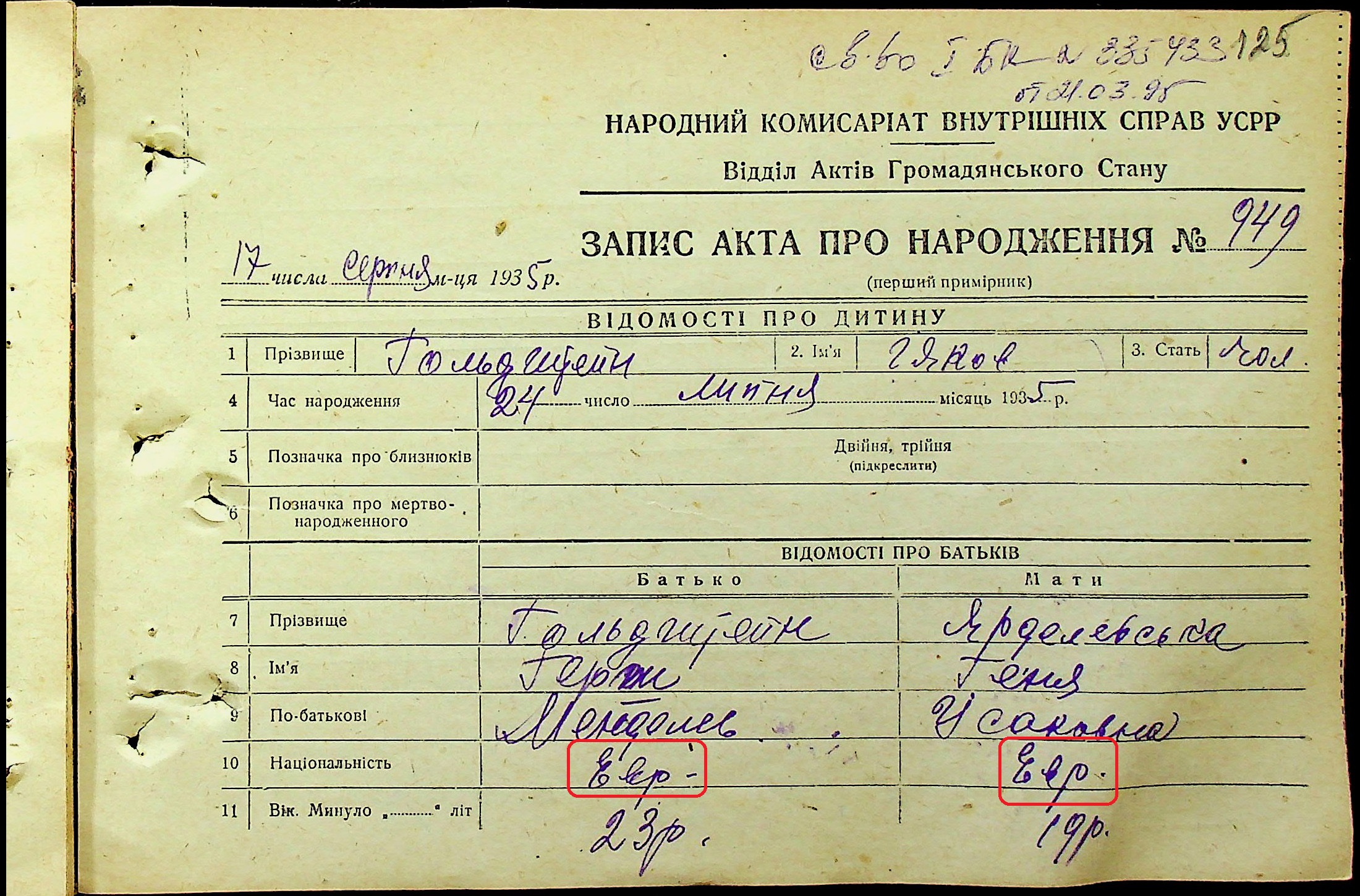
When it comes to Polish roots, it is worth remembering that:
- It must be written in the document that your ancestor’s nationality is “Polish”;
- There are restrictions on the depth of generations – the Polish roots should not be deeper than the 4th tribe, that is, the Poles should be maximum great-grandparents – no further;
- When it comes to the great-grandparents, the Poles must be two people – two great-grandmothers or two great-grandfathers, or one great-grandfather and one great-grandmother. When it comes to the generation of parents and grandparents, it is enough that one of them has Polish roots – mother, father, grandfather, grandmother.
- The option is also considered if the ancestor served in the Polish Army and in the certificate of service says “Polish”;
- If an ancestor was not an ethnic Pole, but lived in the territory that was part of Poland in a certain period (most often the 1920s-1930s), he/she could obtain Polish citizenship and be on the voter list.
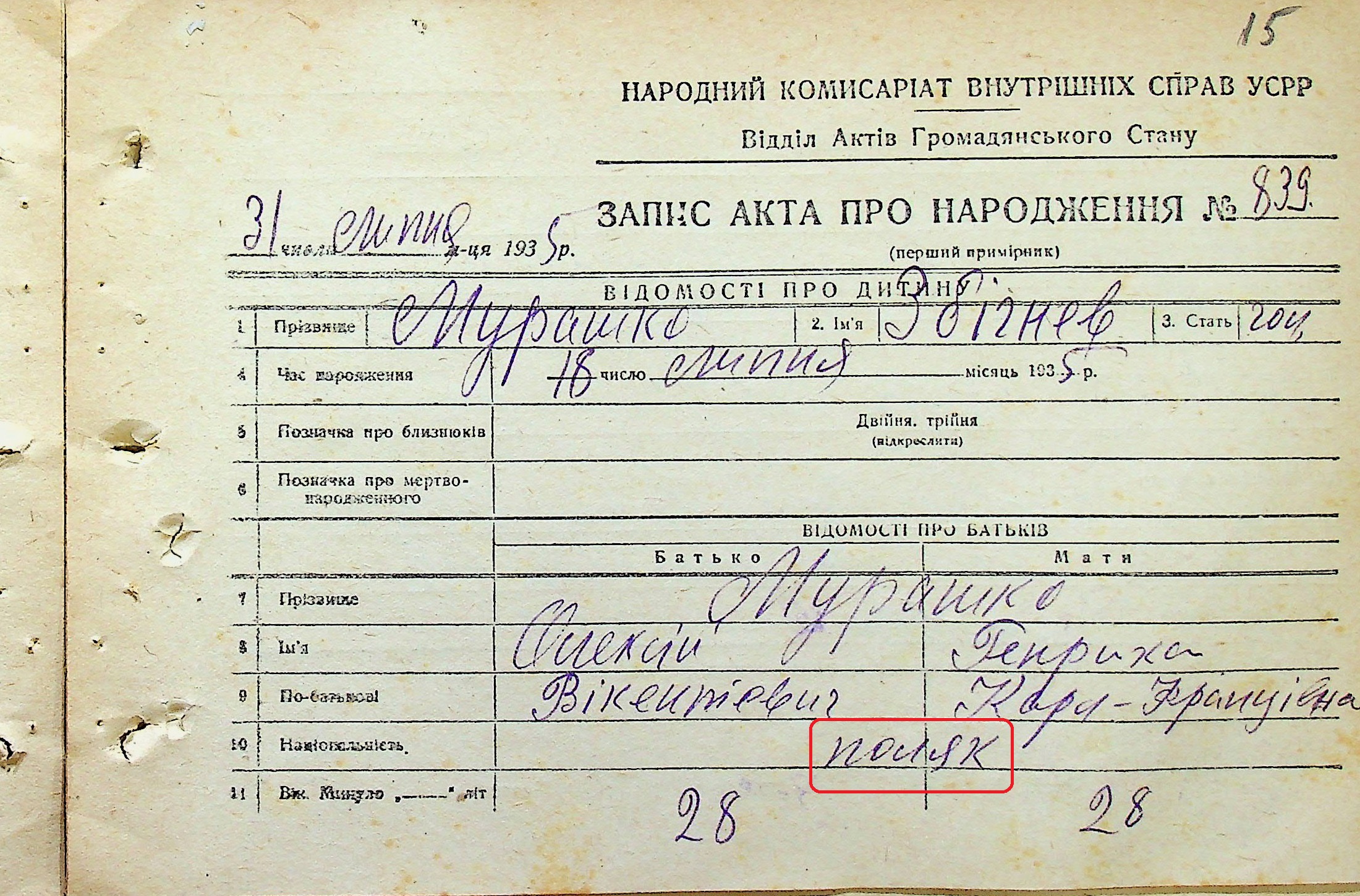
In the process of confirming your nationality you may encounter a number of problems:
- In most cases, you only need documents from the Soviet period, since in the pre-revolutionary Russian Empire there was no “nationality” column in the documents. An exception is, for example, proof of Jewishness, since the metric record of a child’s birth in a synagogue is a direct indication that the child and his parents practiced Judaism.
- Often the problem is that people hid their nationality for whatever reason. This is especially true for the 1920s and 1930s in the Soviet Union, when there were both political repression and repression on ethnic grounds. For example, your grandmother was Polish, but on her marriage certificate and in the birth documents of her children she is listed as Ukrainian or Russian.
- Often, there are cases when the document you need about your ancestor has not been preserved and your search comes to a dead end, as many archives lost part of their collections during World War II. Here it should be remembered that not only documents recording the act of civil status (birth, marriage, death, divorce) of your ancestor are relevant for confirming nationality, but also additional sources: personal files from places of study, work, party questionnaires, files of repressed persons, rural household register of the collective farms, military documentation, etc.
- To contact a consulate you must have not only documents confirming the nationality of an ancestor, but also a full documentary chain of your relationship to this person, starting with your birth certificate.
- Searching for and obtaining documents takes time – this process is never quick. If you need to obtain a set of different documents, it should be understood that this can take an average of 2 to 6 months.
Our company offers you a professional search for documents to confirm nationality. The average cost of service for collecting a package of documents is $300–500.

Passport application form as a genealogical source
Passport application forms (Form 1) are an important and very often indispensable source both for researching
How to start research of your family?
These days, interest in genealogy is actively growing and, accordingly, there are more and more

What can be found in the registry office documents?
For most people, the registry office is the place of registration of certain events. However,
Where to look for ancestral data?
Genealogy research always involves working with different kinds of historical documents. Often, at the beginning
Search for documents in the State Archives of the city of Kyiv
State Archives in the City of Kyiv – one of the key archival institutions in the
Search for documents on repression and repressed people in the archives of Ukraine
The repressive policy of the Soviet authorities is an acknowledged fact, which is repeatedly confirmed
 |
UA DOCS — search for documents in the archives of Ukraine, genealogical and historical research. © UA DOCS 2010 – 2024 |